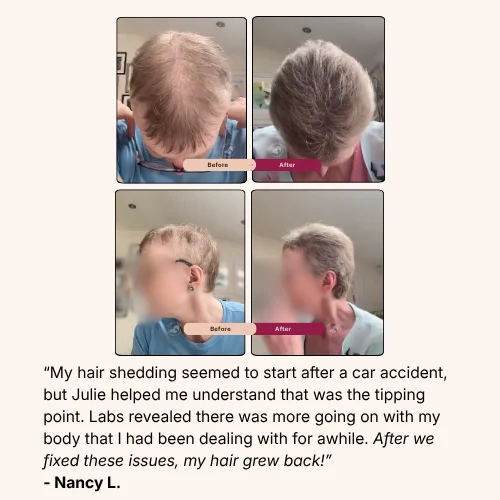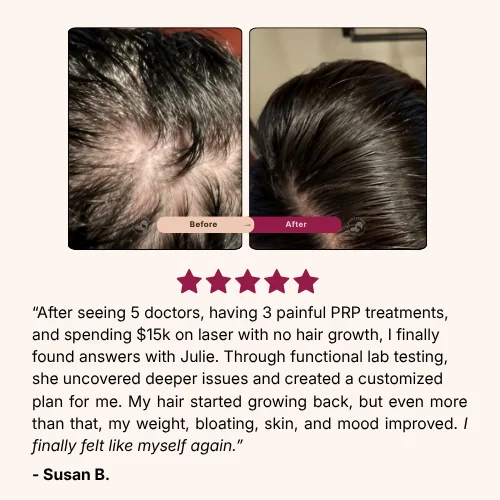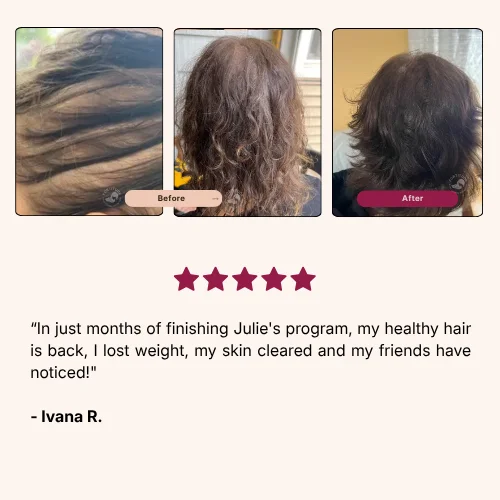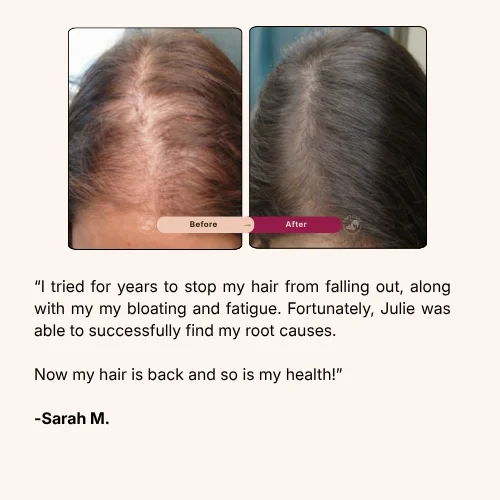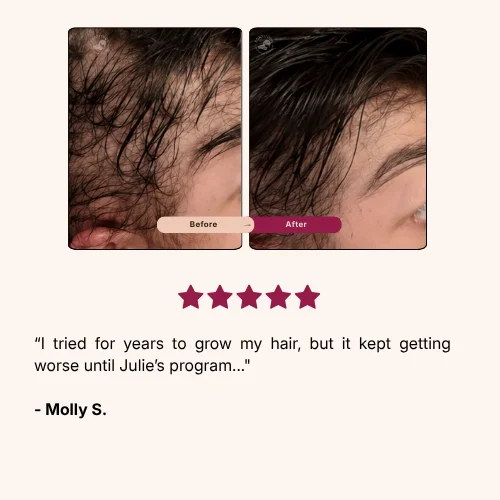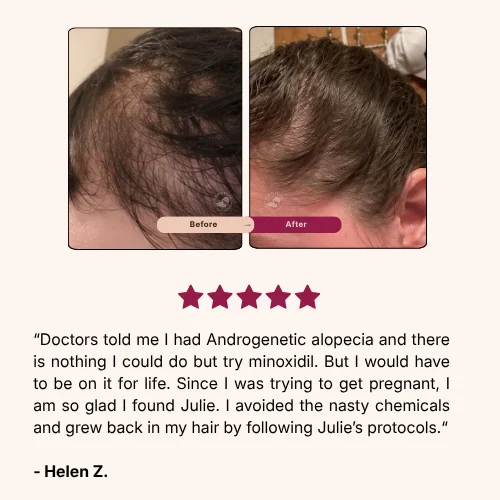
All Types of Hair Thinning & Alopecia
We specialize in females of any age, or any stage of hair loss, or as a prevention
FEMALE HAIR THINNING & ALOPECIA
The Answer to Your Hair Loss May Not Be Where
You’ve Been Told to Look
Your hair is telling a story. We know how to investigate it.
Female hair thinning and alopecia can be complex, frustrating, and deeply personal, especially when you’ve already tried products, serums, supplements, medications, or procedures and still don’t understand why your hair keeps falling out.
Hair loss is not one condition. And there is no one-size-fits-all answer.
That’s why Julie Olson created HealthyHairFix® our proprietary approach to female hair loss that investigates the pieces that too often get overlooked and it goes deeper than products, procedures, and surface-level solutions.
Stop guessing. Start investigating.
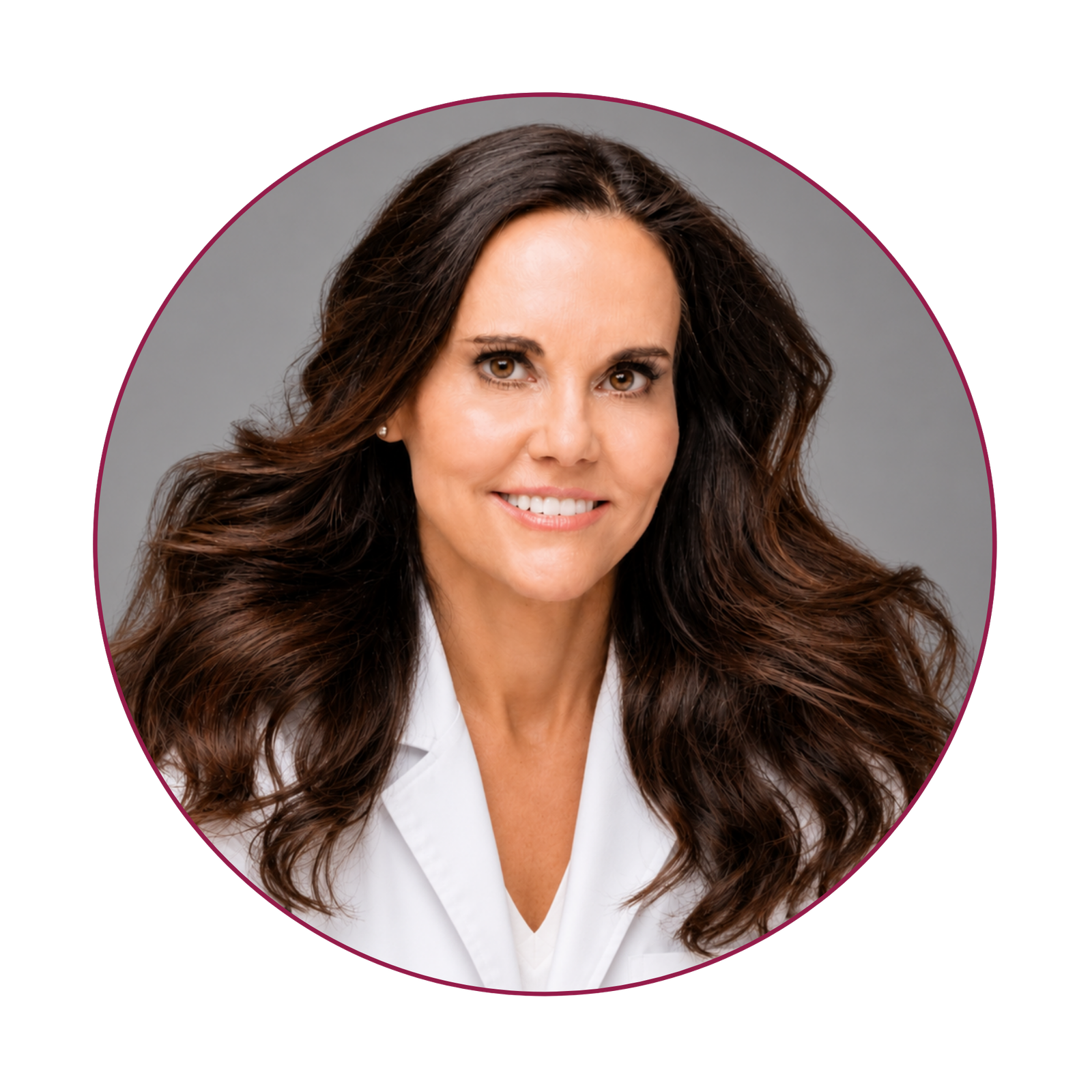
Led by Julie Olson
Triple Board-Certified Nutritionist | Functional Medicine Expert & Practitioner | Female Hair Thinning & Alopecia Specialist | PubMed-Published Researcher | Creator of HealthyHairFix®
What Type of Hair Loss Are You Experiencing?
There is no single pattern called “female hair loss.”
- Some women experience gradual thinning.
- Others suddenly begin shedding much more hair.
- Some develop smooth, round bald patches.
- Others notice changes around the temples, frontal hairline or crown.
- Some experience scalp symptoms along with the hair loss.
- And sometimes more than one type of hair loss occurs simultaneously.
“The hair follicle is one of the most unique organs in the human body — it is the only structure capable of complete self-renewal throughout an entire lifetime.”
~ Ralf Paus, MD
Here are some of the major types of female hair loss we see women struggling to understand.
Female-Pattern Hair Loss
Androgenetic Alopecia
Female-pattern hair loss is a common form of non-scarring hair loss in women.¹
Typical changes may include:
Gradual loss of density
A widening center part
Thinning through the top or crown
A smaller ponytail
Finer, shorter hairs over time
The process involves progressive follicular miniaturization, meaning affected follicles begin producing progressively finer hairs. Genetics, age, hormonal signaling, menopause and other physiological factors may be relevant depending on the woman.¹
Female-pattern hair loss can also coexist with another condition, including telogen effluvium.¹
That distinction matters.
Telogen Effluvium
Excessive Diffuse Shedding
Telogen effluvium often looks very different.
Instead of gradually noticing a widening part, a woman may suddenly realize she is losing substantially more hair throughout the scalp.²
Potential triggers can include:
Illness or high fever
Surgery
Rapid weight loss
Major dietary restriction
Childbirth
Significant emotional or physical stress
Medication changes
Nutritional inadequacy
One of the most confusing features is the delay.
The triggering event may occur months before the visible shedding begins.²
Alopecia Areata
Sudden, Immune-Mediated Hair Loss
Alopecia areata is an immune-mediated form of non-scarring hair loss.³
It may appear as:
One or more smooth bald patches
More extensive scalp hair loss
Eyebrow or eyelash involvement
Relatively sudden changes
Episodes of loss and regrowth
Alopecia areata is biologically different from female-pattern hair loss and telogen effluvium, even though a woman may initially describe any of them simply as, “My hair is falling out.”
Research also supports an association between alopecia areata and other immune-mediated conditions.³
Traction Alopecia
Hair Loss From Repeated Tension
Repeated pulling or tension on follicles can contribute to traction alopecia.⁴
It may be associated with tight:
Braids or ponytails
Buns
Extensions
Weaves
Other hairstyles that repeatedly place tension on the same follicles
It commonly affects the hairline and temples.
Early recognition matters because longstanding traction may eventually result in permanent follicular damage.⁴
Scarring Alopecias
The Hair Loss We Should Not Ignore
Scarring, or cicatricial, alopecias are different because inflammation can permanently damage and destroy hair follicles.
Examples include:
Frontal Fibrosing Alopecia — FFA
Often affects the frontal and temporal hairline and may also involve eyebrow loss.⁵
Lichen Planopilaris — LPP
An inflammatory form of scarring alopecia that may present with areas of hair loss accompanied by scalp symptoms or inflammation.⁵
Central Centrifugal Cicatricial Alopecia — CCCA
Typically begins near the crown or central scalp and progresses outward. ⁶
Research also demonstrates the meaningful emotional and quality-of-life impact female hair loss can have.⁷
Hair Breakage &
Hair-Shaft Changes
Not everything that looks like hair loss begins at the follicle.
Hair may also appear significantly thinner because strands are:
- Breaking or becoming fragile
- Changing texture
- Becoming progressively finer
- Breaking faster than length can be retained
Nutrition, hair-care practices, chemical processing, heat and other factors may contribute.
Research has found associations between serum ferritin and certain forms of female alopecia, although no single nutrient explains every case of hair loss.⁸
Hair Loss Is Often Multifactorial
This is one of the most important concepts we want women to understand.
There isn’t always one single hidden “root cause.”
For example:
You may have female-pattern hair loss and increased shedding following an illness.
You may have a genetic predisposition and nutritional depletion.
You may be entering menopause while also experiencing thyroid changes, prolonged stress or rapid weight loss.
Several factors can overlap.
That is why we focus on drivers, contributors, patterns and influences on healthy hair growth rather than assuming every woman has the same underlying problem.

We Look Beyond the Hair
Then we examine how the hair-loss pattern may intersect with:
Laboratory Findings + Health History + Nutrition + Digestion + Metabolism + Hormones + Stress + Toxins + Methylation + Inflammation + more!
“The hair is the entry point. The body is the story.”
Your Hair Is Part of Your Biology
Hair health reflects:
- Nutrient status and absorption
- Hormonal and thyroid balance
- Gut and digestive function
- Chronic inflammation levels
- Stress physiology
- Toxin and detoxification load
- And more!
HealthyHairFix® connects these dots.
Introducing

The HealthyHairFix®
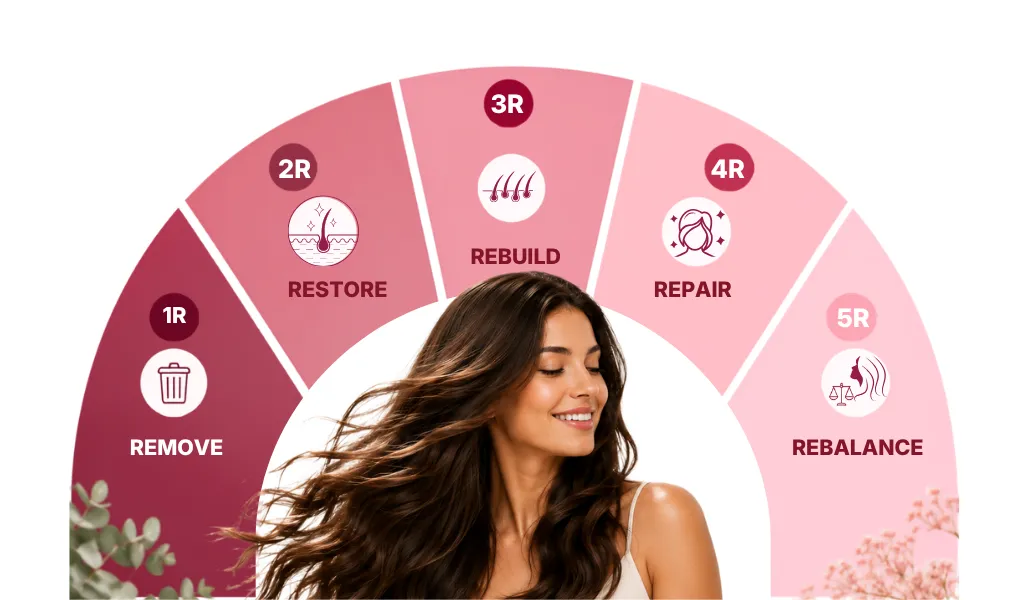
The HealthyHairFix® Method is an informed 5-step protocol that connects your symptoms, history, and lab data to support healthier hair growth from the inside out.
The HealthyHairFix® Difference
A Whole New Approach to Hair Loss
Hair loss is complex and involves your entire body.
Gut dysfunction can impair nutrient absorption and immune function. Thyroid and hormonal changes may disrupt the hair-growth cycle. Blood sugar imbalance, chronic inflammation, stress, medications, rapid weight loss, environmental exposures, nutrient deficiencies, and other factors may also contribute.
Yet the multibillion-dollar beauty industry continues to direct millions toward shampoos, serums, supplements, and costly procedures without first investigating what may be occurring inside the body.
That is why Julie created HealthyHairFix®
We Don't Guess. We Test, Investigate, and Connect the Dots.
HealthyHairFix® is a trademarked, lab-informed approach to identifying the underlying factors that may contribute to hair thinning and alopecia.
Functional lab testing is a cornerstone of its methodology.
Instead of relying solely on symptoms, assumptions, or generalized recommendations, we use targeted functional labs to obtain scientific information about the systems that may be affecting your hair.
These results help us move beyond trial-and-error.
They help us identify patterns, prioritize what deserves attention first, and develop a strategy based on your individual biology rather than a generic hair-loss protocol.
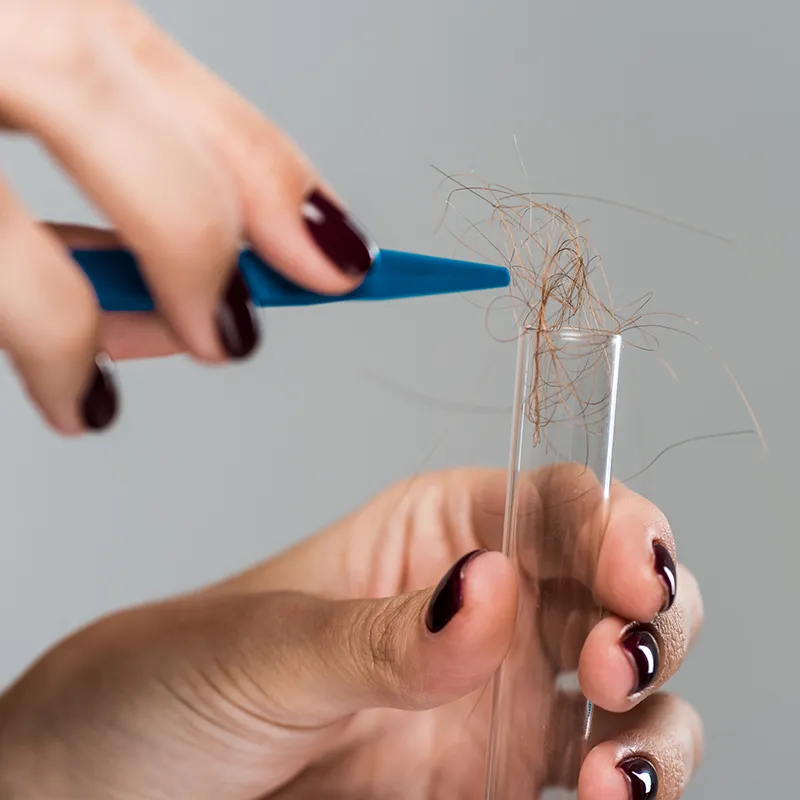
Functional Labs Reveal What Symptoms Alone Cannot
Symptoms are important, but they do not always tell us why something is happening.
Fatigue, digestive problems, hormonal issues, pain, toxins, stress, and hair shedding may seem unrelated. Functional testing can help uncover the connections among them and reveal imbalances that might otherwise be missed.
That is where Julie’s research background and functional medicine training come together.
We interpret your lab findings in the context of your hair-loss pattern, medical and health history, symptoms, nutrition, any medications, stress, lifestyle, and environmental exposures.
The labs provide the data. Your story provides the context. Together, they create a clearer and personalized plan to fix it.

Labs Guide the Plan. Your Story Shapes It.
Our strength is connecting lab findings with the patterns in your history and symptoms, then translating complex information into practical steps you can understand and use.
This is not a generic supplement list. It is not a rigid protocol applied to every woman.
Your hair loss has its own history. Your biology is unique. Your testing and plan should reflect that.
Hair growth takes time.
So does identifying and improving the internal conditions to support it.

“Normal” Labs
Don't Always End the Investigation
You've been told
“Everything looks normal.”
Reference ranges are useful, but laboratory values do not exist in isolation.We look at laboratory findings alongside your story, symptoms, nutrition, history, hormones, toxic exposures, digestion, weight changes, stressors and hair-loss pattern.
Then We Ask
Does the complete picture suggest an area that deserves nutritional support, monitoring or further evaluation?
That is very different from assuming one number on a laboratory report explains why your hair is thinning.
Supplements Are Tools.
They're Not the Investigation or the Answer.
The hair-loss marketplace makes it easy to believe that the next capsule, gummy or powder will provide the answer.
Supplementation is appropriate when it’s targeted, tested, or necessary.
Sometimes it isn’t.
More is not better and can be worse than taking none. For instance, too little or too much selenium or iron causes hair loss.
“Before you buy another hair supplement, find out what your hair may actually need.”

What Happens When the Real Cause Is Never Identified?
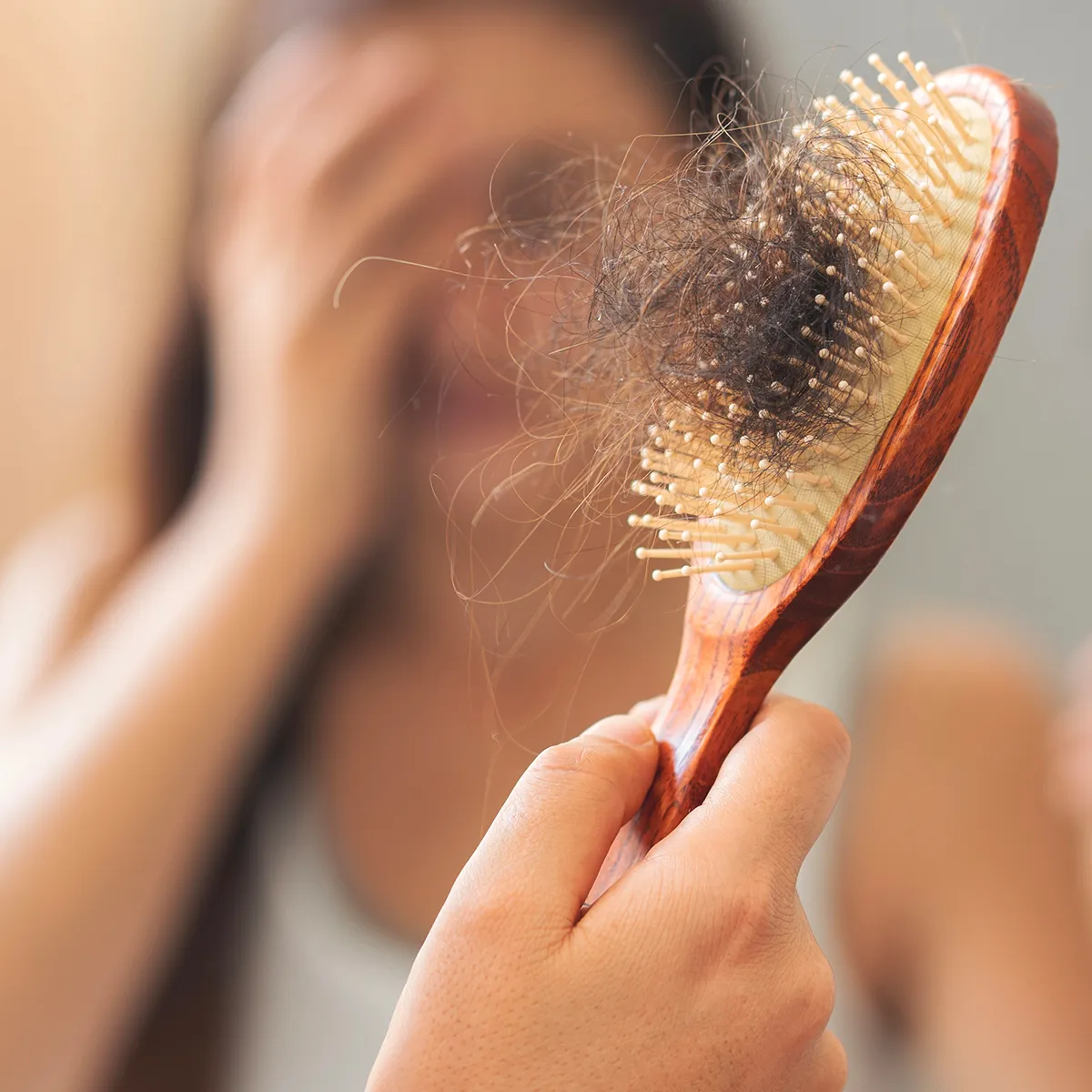
Without understanding what’s actually driving your hair loss, most people end up stuck in a frustrating cycle of trial and error.
- Keep guessing while the underlying problem continues unchecked
- Continue buying expensive shampoos, serums, and supplements that deliver little or only temporary results
- Spend thousands of dollars on prescriptions, procedures, or cosmetic treatments
- Watch hair thinning slowly progress without understanding why
- Feel increasingly frustrated as every “solution” leads to another dead end
- Lose confidence while searching for answers that never fully arrive

You’re a Good Fit for Our Approach If...
You're experiencing hair thinning, shedding or alopecia and:
- You don't know where to begin.
- Your part is widening or your ponytail feels smaller.
- You're suddenly shedding significantly more hair.
- You've developed patches or changes around your hairline.
- You've tried multiple products, procedures, or supplements without understanding why your hair changed.
- Your laboratory results have been called “normal,” but you still have questions.
- Your hair changed during perimenopause or menopause.
- Shedding began after illness, surgery, prolonged stress or rapid weight loss.
- You're using a GLP-1 or a semaglutide medication.
- You have other symptoms or concerns about nutrient absorption.
- You're already using a medication such as Minoxidil or hair-growth products and want to address nutritional and whole-body factors as well.
- You want someone to connect your hair, nutrition, labs, symptoms, and health history rather than looking at each separately.
Already Using Medication
or Hair-Growth Products
or Wear Extensions?
That's Okay.
“We're not anti-beauty, anti-medication, or anti-procedure. We're anti-guessing.”
Our role is different. Our approach is unique.
If you’re already receiving treatment, that information is another important part of your overall picture.
CLARITY BEFORE YOU COMMIT
Frequently Asked Questions
What are the different types of hair loss in women?
Major forms include female-pattern hair loss, telogen effluvium, alopecia areata, traction alopecia, and scarring alopecias such as frontal fibrosing alopecia, lichen planopilaris, and central centrifugal cicatricial alopecia.
Hair breakage can also create the appearance of thinning, and some women experience more than one type of hair loss simultaneously.
How can I tell what type of hair loss I have?
The pattern, timing and accompanying symptoms provide important clues.
Gradual widening of the part looks different from sudden diffuse shedding, smooth bald patches, frontal hairline recession or hair loss accompanied by scalp inflammation.
You do not need to identify the type yourself before starting with us.
Can nutrition contribute to female hair loss?
Yes, inadequate protein intake or specific nutrient deficiencies contribute to all forms of hair shedding, thinning, and even to autoimmune hair loss.
But female hair loss is often multifactorial.
Nutrition needs to be considered alongside the hair-loss pattern, health history, medications, hormonal and metabolic factors, digestion, absorption, and other physiological stressors.
Why is my hair falling out when my blood tests are “normal”?
Laboratory reference ranges provide useful information, but they are only one part of the picture.
We review laboratory data alongside your nutrition, symptoms, medications, digestion, health history, and the timing and pattern of your hair loss, among other factors.
Do I need functional laboratory testing?
Not necessarily.
We begin by reviewing the information you already have.
Additional testing should answer a meaningful question rather than simply generate more data.
Do you diagnose alopecia?
Our services do not provide medical diagnoses of alopecia or other diseases.
A medical diagnosis and functional nutrition evaluation can answer different questions and complement one another.
What if I've already been diagnosed with a type of alopecia?
That information is valuable. Bring it with you.
But it does not define or label you. We dig much deeper than a diagnosis.
What if my hair loss started after losing weight?
That timing matters.
Rapid or substantial weight loss can be associated with telogen effluvium and may also expose another hair-loss pattern that was already developing.²
Still Searching for Answers About Your Hair Loss?
You don't need another round of trial and error. Start with us and discover what your hair may be telling you.
Stop guessing. Start investigating.
SELECTED RESEARCH & REFERENCES
1. Female-Pattern Hair Loss
Siah TW, Muir-Green L, Shapiro J. Female Pattern Hair Loss: A Retrospective Study in a Tertiary Referral Center. International Journal of Trichology. 2016;8(2):57-61. doi:10.4103/0974-7753.188033.
Ramos PM, Miot HA. Female Pattern Hair Loss: a clinical and pathophysiological review. Anais Brasileiros de Dermatologia. 2015;90(4):529-543.
2. Telogen Effluvium
Karakoyun Ö, et al. Retrospective Review of 2851 Female Patients With Telogen Effluvium: A Single-Center Experience. Journal of Cosmetic Dermatology. 2025;24(2):e70037.
Kang DH, Kwon SH, Sim WY, Lew BL. Telogen Effluvium Associated With Weight Loss: A Single Center Retrospective Study. Annals of Dermatology. 2024;36(6):384-388. doi:10.5021/ad.24.043.
3. Alopecia Areata
Moseley IH, et al. Immune-mediated diseases and subsequent risk of alopecia areata in a prospective study of US women. Archives of Dermatological Research. 2023;315(4):807-815.
4. Traction Alopecia
Balazic E, Hawkins K, Choi J, Konisky H, Chen A, Kobets K. Traction alopecia: assessing the presentation, management and outcomes in a diverse urban population. Clinical and Experimental Dermatology. 2023;48(9):1030-1031. doi:10.1093/ced/llad154.
5. Frontal Fibrosing & Scarring Alopecia
Carmona-Rodríguez M, et al. Frontal Fibrosing Alopecia: An Observational Single-Center Study of 306 Cases. Life (Basel). 2023;13(6):1344. doi:10.3390/life13061344.
Tziotzios C, et al. Genome-wide association study in frontal fibrosing alopecia identifies four susceptibility loci including HLA-B*07:02. Nature Communications. 2019;10:1150.
6. Central Centrifugal Cicatricial Alopecia
Miteva M, Tosti A. Pathologic diagnosis of central centrifugal cicatricial alopecia on horizontal sections. American Journal of Dermatopathology. 2014;36(11):859-864. doi:10.1097/DAD.0000000000000174.
7. Impact of Female Hair Loss
Hwang HW, Ryou S, Jeong JH, et al. The Quality of Life and Psychosocial Impact on Female Pattern Hair Loss. Annals of Dermatology. 2024;36(1):44-52. doi:10.5021/ad.23.082.
8. Iron & Female Hair Loss
Kantor J, Kessler LJ, Brooks DG, Cotsarelis G. Decreased serum ferritin is associated with alopecia in women. Journal of Investigative Dermatology. 2003;121(5):985-988. doi:10.1046/j.1523-1747.2003.12540.x.