GLP-1 Weight Loss & Hair Health
A Functional Nutrition Approach to Supporting Your Hair, Strength and Metabolic Health During Weight Loss
GLP-1 and related weight-loss medications can provide meaningful benefits for weight, blood sugar and metabolic health.
But when appetite decreases, weight comes off quickly, or nutrition does not keep pace with those changes, hair shedding can become an unexpected concern.
Rapid weight loss, inadequate protein, nutrient depletion, digestive changes and pre-existing metabolic or hair-loss factors may all contribute.
“The medication may be part of the picture, but it is rarely the entire picture.”

Julie Olson, CFMP, CN, BCHN
Triple Board-Certified Nutritionist | Functional Medicine Practitioner | Hair Thinning & Alopecia Specialist | Published Researcher | Creator of HealthyHairFix®
Specializing in the nutritional, metabolic and digestive factors that may influence hair health during GLP-1-assisted weight loss.
The Scale Doesn’t Tell the Whole Story
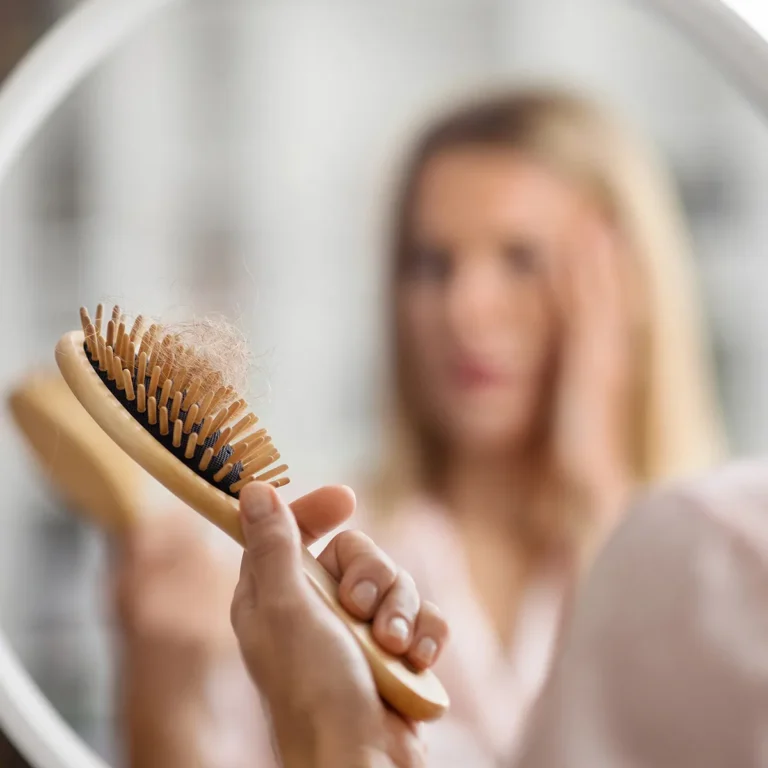
You may be thrilled with your weight-loss progress while becoming increasingly concerned about extra hair in your brush, shower drain, or widening part.
Hair loss has been reported with medications including semaglutide and tirzepatide. But research does not point to one simple explanation for every woman experiencing hair loss during GLP-1-assisted weight loss.
Rapid weight loss, reduced food intake, inadequate protein and nutrients, digestive changes, physiological stress, metabolic shifts and a pre-existing hair-loss condition may all contribute.
“The scale tells you how much weight you lost. It doesn’t tell you what you lost with it.”
- Weight loss is only one measurement of progress.
- Maintaining muscle, strength, nutritional status, metabolic health and healthy hair matters too.
Discover What May Be Driving Your Hair Loss
1
Rate of Weight Loss
Significant or rapid weight loss can act as a physiological stressor and shift more follicles into a resting phase, potentially leading to telogen effluvium. Visible shedding may not appear until months after the original trigger.
“Hair has a memory. The shedding you see today may reflect what was happening months ago.”
2
Protein & Nutritional Adequacy
“Your appetite may disappear. Your nutritional requirements don’t.”
Hair follicles require protein, amino acids, vitamins and minerals to maintain healthy growth.
Important areas I often evaluate include protein intake, iron and ferritin, zinc, vitamin B12, folate, vitamin D, essential fatty acids and overall nutritional adequacy.
The answer is not automatically taking more supplements.
It is identifying what your body actually needs.
Weight loss should not become nutritional depletion.
3
Digestion & Food Tolerance
Nausea, constipation, diarrhea, reflux, prolonged fullness or food aversions can make it difficult to consume adequate nutrient-dense foods.
And eating nutrients is only part of the equation.
Your body must also digest and absorb them.
“A smaller appetite requires a smarter nutrition strategy.”
This is why digestive health and food tolerance are important parts of protecting hair, muscle and overall health during GLP-1-assisted weight loss.
4
Pre-Existing Hair & Metabolic Contributors
Sometimes weight loss does not create the entire problem.
It reveals one that was already developing.
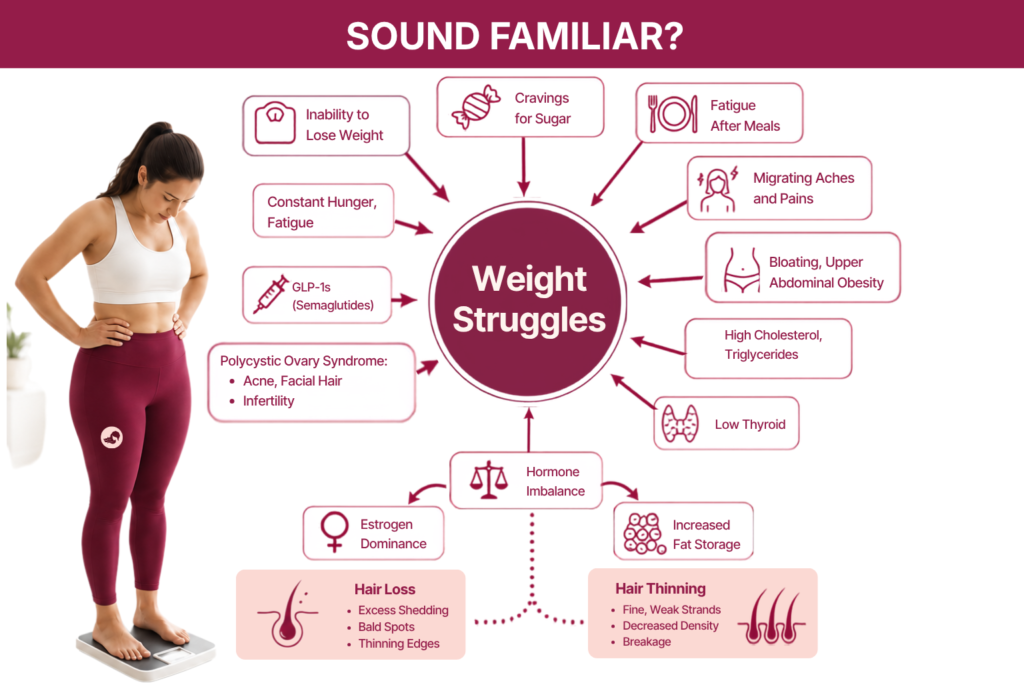
Iron depletion, thyroid dysfunction, female-pattern hair loss, hormonal changes, PCOS, insulin resistance, chronic inflammation, digestive dysfunction, stress and previous restrictive dieting may already be affecting follicle health before GLP-1 therapy begins.
“Sometimes weight loss doesn’t create the hair-loss problem. It reveals a follicle that was already struggling.”
That distinction matters because not all hair loss is the same, and not all hair loss should be approached the same way.
GLP-1s Put a New Spotlight on an Older Problem
Weight-loss-related hair shedding existed long before GLP-1 medications.
“GLP-1s didn’t invent weight-loss-related hair loss. They put a spotlight on it.”
Weight-loss-related hair shedding existed long before GLP-1 medications.
Crash dieting, severe calorie restriction, bariatric procedures, illness, physiological stress and rapid weight loss have all been associated with hair shedding.
What makes the current GLP-1 conversation different is the combination of rapid weight loss, substantial appetite suppression, gastrointestinal changes and the possibility of dramatically reduced food intake.
That is also why my broader Weight Loss Without Sacrificing Your Hair approach applies to women losing weight through many different methods, not only GLP-1 medications.
Not taking a GLP-1? Explore Weight Loss Without Sacrificing Your Hair →
GLP-1s Put a New Spotlight on an Older Problem
Weight-loss-related hair shedding existed long before GLP-1 medications.
What's Long Been True
- Crash dieting and severe calorie restriction
- Bariatric procedures and rapid weight loss
- Illness and physiological stress
- All linked to hair shedding for decades
What's Different With GLP-1s
- Rapid weight loss combined with appetite suppression
- Gastrointestinal changes affecting absorption
- Possibility of dramatically reduced food intake
- A whole-body picture worth evaluating early
That is also why my broader Weight Loss Without Sacrificing Your Hair approach applies to women losing weight through many different methods, not only GLP-1 medications.
Where Nutrition, Metabolism & Hair Biology Meet
I am Julie Olson, a triple board-certified nutritionist, functional medicine practitioner, published researcher and specialist in female hair thinning and alopecia.
My expertise is not prescribing GLP-1 medications.
My expertise is understanding what may be happening nutritionally and metabolically while you are using one and identifying factors that may be putting your hair, strength and overall health at risk.
Through my HealthyHairFix® approach, I look at the connections among hair-loss patterns, protein and nutrient status, blood sugar and insulin, thyroid and hormones, digestion and absorption, inflammation, stress, muscle preservation and the rate of weight loss.
“I don’t just chase the shed. I look at what changed before the shed.”
Because your hair is rarely an isolated problem.
The hair is the entry point. The body is the story.

Helping Your Nutrition Keep Pace With Your Weight Loss
Rather than assuming every woman using a GLP-1 is losing hair for the same reason, I look at the complete picture.
Identify the Pattern
When did the shedding begin? Where is it occurring? What was happening in the months before you noticed it?
Protect Protein & Nutrition
Is reduced appetite compromising protein, calorie intake, micronutrients or lean muscle?
Evaluate Nutritional & Metabolic Factors
Are nutrient levels, thyroid function, blood sugar, hormones or other metabolic factors contributing?
Support Digestion & Absorption
Can you comfortably eat, digest and absorb the nutrients your body and follicles need?
Monitor & Adjust
Because hair changes slowly, identifying nutritional and metabolic concerns early can matter.
“The goal isn’t simply to eat less. It’s to nourish better with the amount you can eat.”
Before, During & After
Before Starting
When possible, establish a baseline for nutrition and hair health before significant weight loss begins.
Know what is happening with your hair, protein intake, nutrient status, thyroid, metabolic health, and digestion before those variables change.
During Active Weight Loss
Pay attention to more than the scale.
Monitor protein and nutrient-dense food intake, rate of weight loss, strength, muscle preservation, digestive tolerance, energy, and changes in shedding.
“A smaller body should not come at the expense of a depleted body.”
If Hair Shedding Begins
Do not automatically assume you need another hair supplement or that you must stop taking your medication.
Create the timeline.
Look at what changed two to four months earlier and evaluate the complete picture.
“Before we pursue another solution, let’s understand what your hair may be telling us.”
Frequently Asked Questions
Hair loss has been reported with semaglutide and tirzepatide medications and appears in current prescribing information for Wegovy and Zepbound.
Recent observational research has also identified an association between GLP-1 receptor agonist use and clinically recorded alopecia. However, this does not establish that the medication directly damages hair follicles.
Rapid weight loss, reduced food intake, nutritional deficiencies, metabolic changes, underlying hair-loss conditions and medication-related effects may all be relevant.
Many cases of weight-loss-related shedding involve non-scarring hair loss, meaning the follicle remains intact.
Whether hair regrows depends on the type of hair loss and whether the factors contributing to it can be identified and addressed.
Telogen effluvium often becomes noticeable several months after a physiological stressor.
That means the shedding you see today may reflect changes in weight, food intake, illness, stress or nutrition that occurred two to four months earlier.
Do not discontinue or change a prescription medication without speaking with the clinician who prescribed it.
GLP-1 medications may provide significant metabolic benefits. Hair loss should be evaluated within the context of your overall health and treatment plan.
Nutritional intervention and investigation of other contributing factors may be appropriate alongside a discussion with your prescriber.
Adequate protein is an important part of supporting hair and preserving lean tissue during weight loss, but protein alone cannot prevent every type of hair loss.
Iron, zinc, thyroid function, hormones, digestion, inflammation, stress, genetics and the rate of weight loss may also contribute.
Do Ozempic, Wegovy, Mounjaro and Zepbound Cause Hair Loss?
Hair loss has been reported with semaglutide and tirzepatide medications and appears in current prescribing information for Wegovy and Zepbound.
Recent observational research has also identified an association between GLP-1 receptor agonist use and clinically recorded alopecia. However, this does not establish that the medication directly damages hair follicles.
Rapid weight loss, reduced food intake, nutritional deficiencies, metabolic changes, underlying hair-loss conditions and medication-related effects may all be relevant.
Is GLP-1-Related Hair Loss Permanent?
Many cases of weight-loss-related shedding involve non-scarring hair loss, meaning the follicle remains intact.
Whether hair regrows depends on the type of hair loss and whether the factors contributing to it can be identified and addressed.
When Does Hair Loss Usually Begin?
Telogen effluvium often becomes noticeable several months after a physiological stressor.
That means the shedding you see today may reflect changes in weight, food intake, illness, stress or nutrition that occurred two to four months earlier.
Should I Stop My GLP-1 Medication If My Hair Is Falling Out?
Do not discontinue or change a prescription medication without speaking with the clinician who prescribed it.
GLP-1 medications may provide significant metabolic benefits. Hair loss should be evaluated within the context of your overall health and treatment plan.
Nutritional intervention and investigation of other contributing factors may be appropriate alongside a discussion with your prescriber.
Can Protein Prevent GLP-1 Hair Loss?
Adequate protein is an important part of supporting hair and preserving lean tissue during weight loss, but protein alone cannot prevent every type of hair loss.
Iron, zinc, thyroid function, hormones, digestion, inflammation, stress, genetics and the rate of weight loss may also contribute.
Don’t Guess About Why Your Hair Is Changing
A Case Analysis can help identify the nutritional, metabolic, digestive, and hair health factors that warrant closer attention.
“I don’t want women simply losing weight. I want them stronger, better nourished, metabolically healthier and protecting their hair along the way.”
You May Benefit From a Case Analysis If:
- You are taking Wegovy, Ozempic, Zepbound, Mounjaro, semaglutide, tirzepatide or a related medication.
- Your hair began shedding after you started treatment or increased your dosage.
- You are considering a GLP-1 and want to protect your hair proactively.
- You are struggling to consume enough protein or nutrient-dense food.
- Your appetite has become extremely low.
- You are experiencing digestive changes.
- You have lost weight rapidly.
- You have a history of thyroid issues, iron deficiency, PCOS, insulin resistance, digestive dysfunction, or chronic dieting.
- Your labs have been called “normal,” yet your hair continues to thin.
A Case Analysis helps you identify the areas that deserve attention before you spend more money on supplements, serums or one-size-fits-all solutions.
A Case Analysis helps you identify the areas that deserve attention before you spend more money on supplements, serums or one-size-fits-all solutions.
30-Minute Case Analysis — $67
A focused review for one primary concern or a more straightforward case.
60-Minute Case Analysis — $137
A more comprehensive review for complex hair loss, multiple symptoms, laboratory results or a longer health history.
Not Using a GLP-1?
Rapid weight loss, restrictive dieting, and other weight-loss strategies can also contribute to hair shedding.
Explore Weight Loss Without Sacrificing Your Hair →
Selected Research & References
- Tang H, Zhang B, Lu Y, et al. Risk of hair loss associated with glucagon-like peptide-1 receptor agonists in adults with type 2 diabetes: target trial emulation. BMJ. 2026;394. doi:10.1136/bmj-2026-100077.
- Burke O, Sa B, Cespedes DA, Sechi A, Tosti A. Glucagon-like peptide-1 receptor agonist medications and hair loss: a retrospective cohort study. Journal of the American Academy of Dermatology. 2025;92(5):1141-1143. doi:10.1016/j.jaad.2025.01.046.
- National Library of Medicine. WEGOVY, semaglutide prescribing information. DailyMed. Revised June 2026.
- U.S. Food and Drug Administration. ZEPBOUND, tirzepatide prescribing information. Revised 2026.
- Morinaga H, Mohri Y, Grachtchouk M, et al. Obesity accelerates hair thinning by stem cell-centric converging mechanisms. Nature. 2021;595(7866):266-271. doi:10.1038/s41586-021-03624-x.
- Smolarczyk K, Meczekalski B, Rudnicka E, Suchta K, Szeliga A. Association of obesity and bariatric surgery on hair health. Medicina. 2024;60(2):325. doi:10.3390/medicina60020325.
- Matilainen V, Koskela P, Keinänen-Kiukaanniemi S. Early androgenetic alopecia as a marker of insulin resistance. Lancet. 2000;356(9236):1165-1166. doi:10.1016/S0140-6736(00)02763-X.
- Qu X, Donnelly R. Sex hormone-binding globulin as an early biomarker and therapeutic target in polycystic ovary syndrome. International Journal of Molecular Sciences. 2020;21(21):8191. doi:10.3390/ijms21218191.
- Goette DK, Odom RB. Alopecia in crash dieters. JAMA. 1976;235(24):2622-2623.
Medical Disclaimer
The information on this page is provided for educational purposes only and is not intended to diagnose, treat, cure or prevent disease.
Julie Olson does not prescribe, discontinue or adjust GLP-1 or other prescription medications. Medication decisions should be made with the qualified medical practitioner responsible for your care.
Functional nutrition services are intended to complement, not replace, appropriate medical care.